How To’s
Explore our lessons to find straightforward explanations (with pictures!) of the vital aspects of comic creation. Our lessons are designed to be modular, so you can read what you care about and skip what you don’t.
Page Layouts
Learn the basics of where to put stuff; panels, speech bubbles, pages, and so on.
Outlining & Drafting
Learn about the “behind the scenes” of making a comic; how to plan, draft, and edit your story.
Tone & Pacing
Learn how to use the medium to its fullest to make your story potent.
Drawing & Coloring
Learn some tips for making effective drawings, even if you’re new to art.
About the Medium
Before choosing a graphic novel or comic format for your story, it’s important to understand some of the strengths, weaknesses, and unique features of the medium.
What’s the difference between a graphic novel and a comic?
A graphic novel is to a comic as a movie is to a TV show; one is a single, self-contained unit and the other comes out in episodes. The advice on this website is applicable to both.
| Graphic Novel | Comic |
| One story told with one book | One story told with a series of books |
That said, “comic” can also be a general term for any story told with panels.
How do comics compare to other media?
The main strengths of a comic are that it’s a visual medium that’s feasible to produce yourself. We recommend them for the writer that wants to create all the visually-stunning scenes they see in film, but wants to work solo and have fine control over their work.
| Comics | Prose | Film | Games | |
| Has audio | ✓ | ✓ | ||
| Has visuals | ✓ | ✓ | ✓ | |
| Inherent voice | ✓ | |||
| Feasible to make alone | ✓ | ✓ | ||
| Interactive | ✓ |
Unique Features of Comics
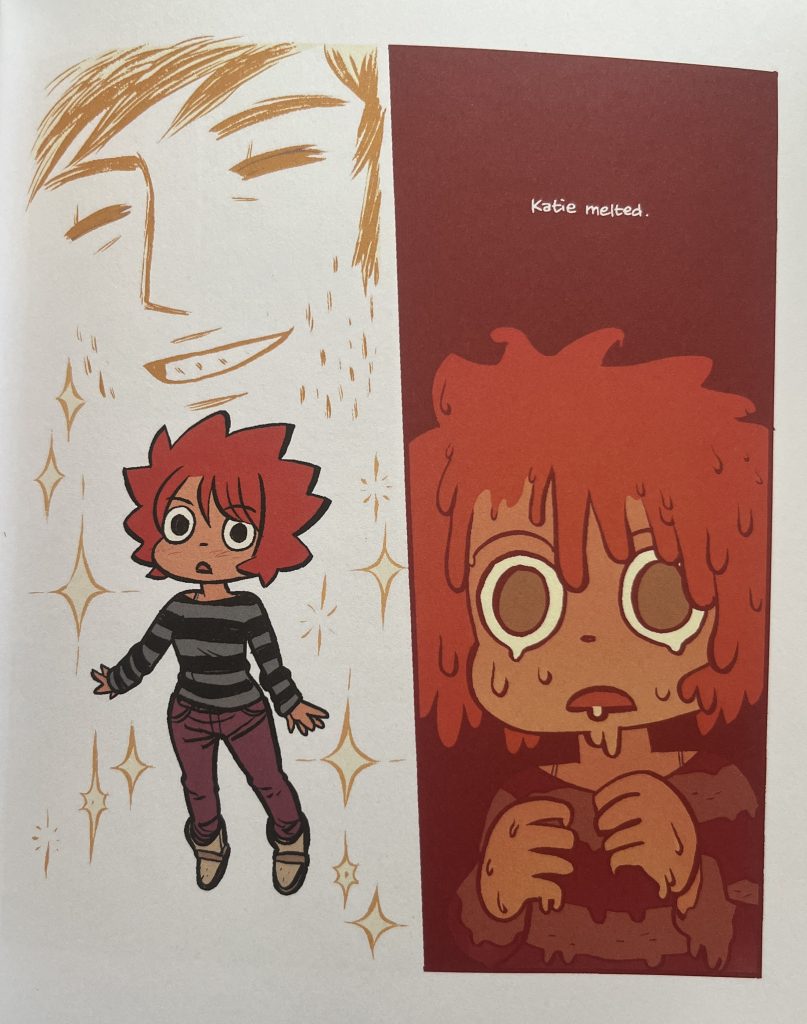
Comics give you a level of control over your pacing and tone that no other medium has. You choose the dimensions of each shot. You choose the art style for the book; you can even change it partway for a tonal shift. Every element of the story is customizable.
Another unique advantage of comics is that they have their own section in the bookstore; they’re not beholden to genre like prose. This gives you even more freedom to let your imagination run wild as you write.
What to be aware of when making comics
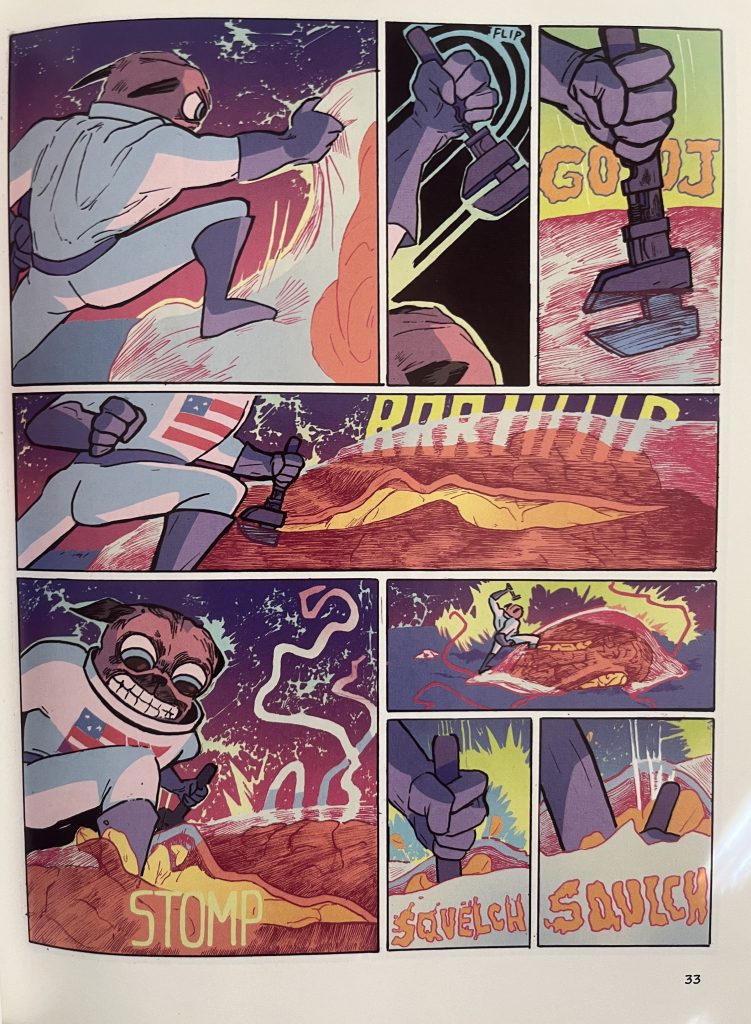
Firstly, comics don’t have sound, so you’ll want to get creative with your onomatopoeia. Look also for ways to communicate the way your character delivers a line, such as an unmistakable expression or italicizing a stressed word.
Second, comics are motionless, so take extra care that the action is communicated when drawing a pose. If you’re finding it hard, you can always just use text to describe what’s happening.
Finally, compose your shots with speech bubbles in mind; more on that in the Page Layout lesson.
Ready to start?
Check out a lesson that speaks to you, or simply start from the beginning by clicking this link.